
Fujipoly offers SARCON® EM Noise Suppression Sheet products for designs that need both electromagnetic-wave damping and thermal-interface performance. Fujipoly describes these products as silicone gap filler pads for electromagnetic-wave suppression that can absorb and damp a wide range of electromagnetic waves while also functioning as thermal interface materials. This page summarizes the publicly available lineup and highlights which specifications should be confirmed through the latest TDS or Fujipoly engineering support before final selection.
EGR-11F-0H is the hardened-surface version of Fujipoly’s EGR-11F EM Noise Suppression Sheet. According to publicly available product information, it uses the same silicone compound as EGR-11F-00, with added hardening on the top surface to improve handling and installation in complex assemblies.
This makes EGR-11F-0H worth considering when the material needs to be placed between a circuit board and enclosure, or when it must conform to tight gaps around IC chip surfaces.
Reference: Fujipoly Official Website(https://www.fujipoly.com/em-noise-suppression-sheet)
EGR-11F-00 is the plain, tacky-on-both-sides type in Fujipoly’s EM Noise Suppression Sheet lineup. Its double-sided tacky silicone surface can help reduce the need for separate adhesive tape, while its soft gel texture helps fill small gaps.
This product is worth reviewing for compact electronic assemblies where electromagnetic wave suppression, gap filling, and thermal interface performance need to be evaluated together.
Reference: Fujipoly Official Website(https://www.fujipoly.com/em-noise-suppression-sheet)
EGR30A-0H is a hardened-surface EM Noise Suppression Sheet with a listed thermal conductivity of 3.0 W/m-K. Compared with the EGR-11F products shown on this page, it is a stronger candidate to review when heat transfer is a more important part of the design requirement.
The product filter lists multiple thickness options, making EGR30A-0H useful for early part-number screening before requesting samples, quotes, or engineering input.
Reference: Fujipoly Official Website https://www.fujipoly.com/em-noise-suppression-sheet
Fujipoly’s public product information can support early screening when an application requires both EM noise suppression and thermal interface performance. For final material selection, engineers should confirm the latest TDS, sample data, and application-specific test results, especially when RF attenuation, thickness tolerance, compliance requirements, or production process conditions are part of the specification.
| Product | Published Frequency Range | Published Absorption Performance | Thermal Conductivity / Thickness | Material / Construction | Selection Notes |
|---|---|---|---|---|---|
| EGR-11F-0H | Not specified on the public product page | Absorption dB value not specified on the public product page | Verify in the latest TDS; public page displays should be checked carefully summary starts at 1 mm; part filter also lists 0.5 mm |
Silicone compound, tacky both sides, hardened surface | Review when easier handling and installation are important in compact or complex assemblies |
| EGR-11F-00 | Not specified on the public product page | Absorption dB value not specified on the public product page | Public data field shows 1 W/m-K; description refers to 0.8 W/m-K by Hot Disk thickness starts at 1.5 mm |
Silicone compound, tacky both sides, plain type | Review for gap filling where self-adhesive handling and EM-noise suppression are both relevant |
| EGR30A-0H | Not specified on the public product page | Absorption dB value not specified on the public product page | 3.0 W/m-K product filter lists 0.5 mm to 2.5 mm options |
Silicone compound, hardened surface | Review when EM-noise suppression must be considered together with higher thermal-interface performance |
The RF absorber market is expanding rapidly, driven by the increasing need for EMI (Electromagnetic Interference) reduction in 5G/6G, autonomous driving, and defense applications.
This site provides comparative information on products and manufacturers by application to help you identify the ideal solutions for R&D, anechoic chambers, and high-frequency testing.
Fujipoly provides several practical touchpoints for engineers evaluating EM Noise Suppression Sheet materials. The product page includes a filter by thermal conductivity, thickness, and product name, as well as request options for samples, quotes, and engineering questions. Fujipoly also states that custom thickness is available by request, and its FAQ notes that the company can assist with dispensing-equipment suggestions and customized packaging depending on the application.
| Company Name | Fujipoly America Corp. |
|---|---|
| Listed Address | 900 Milik Street, P.O. Box 119, Carteret, NJ 07008-0119 |
| Phone | 732.969.0100 |
| Official Website | https://www.fujipoly.com/ |
| Certifications Displayed on Website | ISO 9001:2015, IATF 16949:2016 |
Advertiser Disclosure:
We receive compensation from some of the companies listed below.This compensation may affect which companies are included and the order in which they appear.
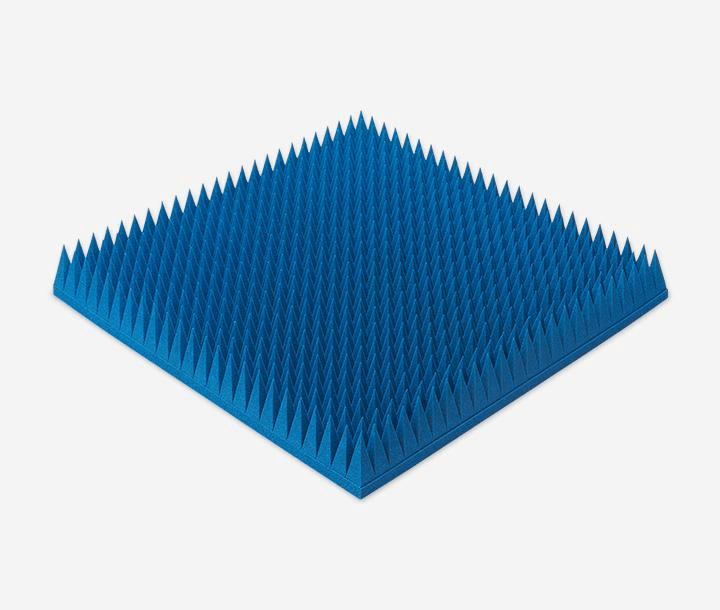
| Frequency Range |
|---|
| 3GHz-320GHz |
| Material |
| Urethane Foam |
| Key Features |
| Up to 50 dB of absorption |
At just 550g per panel—approximately half the weight of competing products (*1)—this polyurethane foam absorber covers a wide frequency range from 3 to 320 GHz.
Delivers 50 dB absorption, outperforming conventional heavy ferrites.
Velcro-backed for rapid mounting, ideal for temporary setups and cost-effective maintenance.
| Frequency Range |
|---|
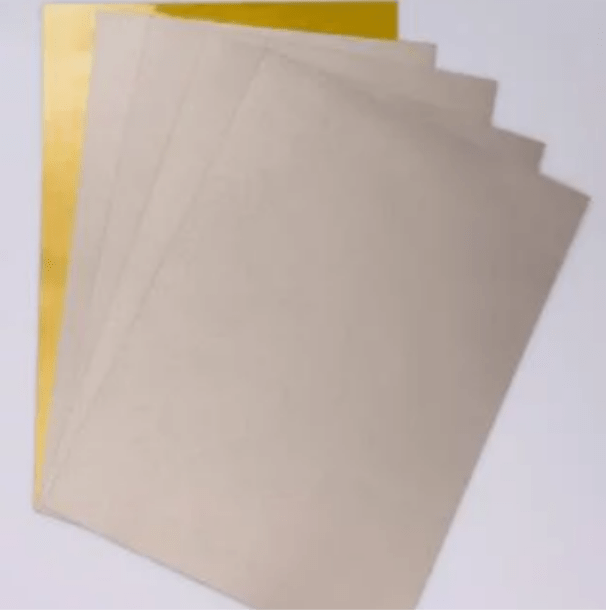
| 20MHz-3GHz |
| Material |
| Elastomer |
| Key Features |
| Permeability (at 1 MHz): 150 |
Heat-resistant elastomer: Designed for direct SMT processing and high-temperature durability.
Ultra-thin (from 0.1 mm) for high-density integration with robust EMI suppression.
It significantly reduces assembly workload and enables EMI countermeasures without altering the existing manufacturing process.
| Frequency Range |
|---|
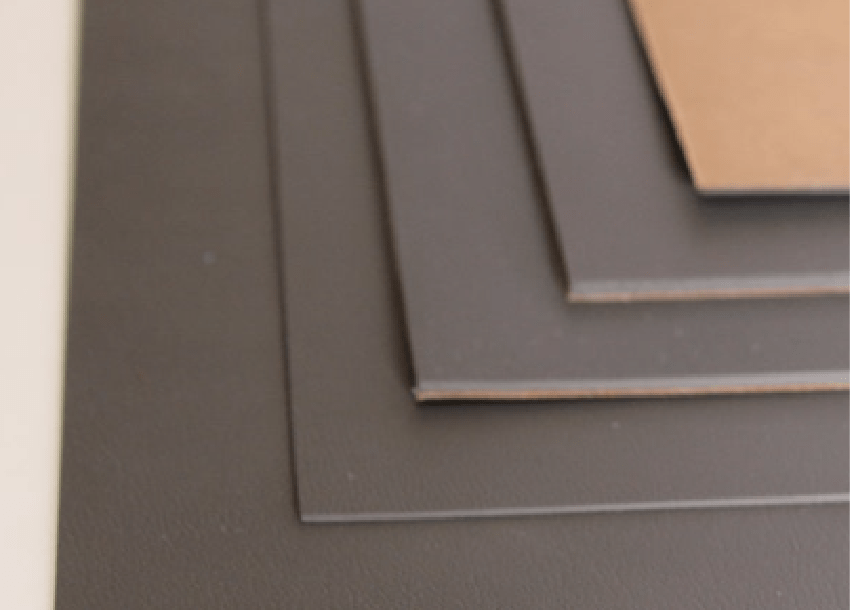
| 1-35 GHz |
| Material |
| Elastomer |
| Key Features |
| Reflection Performance: –20 dB |
Frequency-tuned for specific radar absorption, offering superior stealth performance over standard RF sheets (*2).
Millimeter-thin design delivers –20 dB reflection, ensuring high absorption while preserving aerodynamic integrity.
Excellent conformance to complex geometries with thermal stability from –60°C to 150°C—ideal for aerospace platforms.