
Thin RF Absorber Selection Guide
Thin RF absorbers are used where space is limited, but not all sheets serve the same purpose. Some reduce reflections at specific frequencies, while others suppress noise close to electronic components.
Start by identifying whether you need to reduce RF reflections or control near-field interference. Then compare the available thickness, mounting requirements, and performance data for the specific material grade.
See what to check before selecting an absorber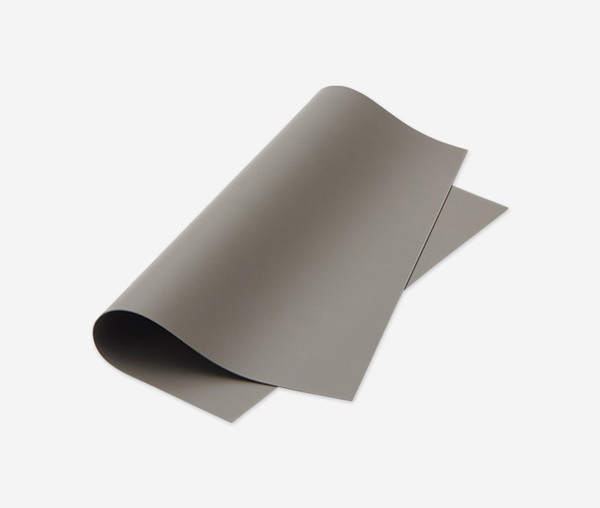
Product image source: Microwave Factory official website
Thin electromagnetic absorbers are sheets or films designed for applications with limited installation space. They include resonant RF absorber sheets and near-field noise suppression films. Although both are available in thin, flexible forms, they address different types of electromagnetic interference.
The type of interference matters more than thickness alone. A film designed to suppress noise around circuit components cannot be assumed to provide the same reflection control as a resonant sheet installed on a metal surface.
References: Microwave Factory: EC-SORB SF; Laird: NoiseSorb NS1000HTRC; PPG: C-RAM FLX
The appropriate material depends on where the unwanted electromagnetic energy originates and how it reaches the affected component or measurement area. The table below shows which types to evaluate for common applications.
| Application | Type to consider | What to check |
|---|---|---|
| RF reflections from antenna supports or metal structures | Resonant RF absorber sheet | Target frequency, incidence angle, backing, and coverage |
| Unwanted coupling near chips, memory, or power ICs | Near-field noise suppression film | Noise frequency, placement, available clearance, and measured improvement |
| Noise associated with circuit traces or flat cables | Near-field noise suppression film | Coupling path and the effect of film placement on circuit operation |
| Reflections from curved outdoor structures | Flexible resonant sheet suitable for outdoor conditions | Material grade, bonding method, weather exposure, and installed thickness |
Application references: EC-SORB SF datasheet; NoiseSorb NS1000HTRC datasheet; C-RAM FLX datasheet
Check these six points before comparing grades or requesting samples.
The following products cover two different applications: frequency-tuned reflection control and near-field noise suppression. Their frequency specifications and thickness ranges provide a starting point for comparison.
| Product | Absorber type | Published frequency information | Sheet thickness |
|---|---|---|---|
| EC-SORB® SF | Resonant RF absorber sheet | Standard design frequencies: 1–16 GHz | 1.1–4.7 mm, depending on grade |
| NoiseSorb™ NS1000HTRC | Near-field noise suppression film | 20 MHz–3 GHz | 0.1–0.5 mm |
| C-RAM™ FLX | Resonant RF absorber sheet | Design frequencies: 1–35 GHz | Approximately 0.6–6.4 mm, depending on grade |
These thickness figures refer to the published absorber grades. Check the total installed thickness, including adhesive and backing, before selecting a product.
EC-SORB SF is a flexible silicone-rubber resonant absorber designed to reduce reflections at selected frequencies. Its thin construction makes it suitable for installations with limited space, while its flexibility allows it to conform to curved surfaces.
Metal backing is required when the sheet is installed on a non-metallic surface. The 28, 60, and 76.5 GHz MB versions have separate technical bulletins.
| Supplier | Microwave Factory |
|---|---|
| Frequency information | Standard: 1–16 GHz; custom designs: 17–22 GHz |
| Reflectivity | Grade-dependent; the table lists < −12 dB at 1 GHz, < −16 dB at 1.5 GHz, < −18 dB at 2 GHz, and < −20 dB for 2.5–16 GHz grades at their resonant frequencies |
| Standard sheet size | 305 × 305 mm |
| Thickness | 1.1–4.7 mm, depending on grade |
| Material | Silicone rubber |
| Operating temperature | −54°C to +160°C |
Reference: Microwave Factory: EC-SORB SF datasheet. Published values are typical rather than guaranteed and were measured with metal backing.
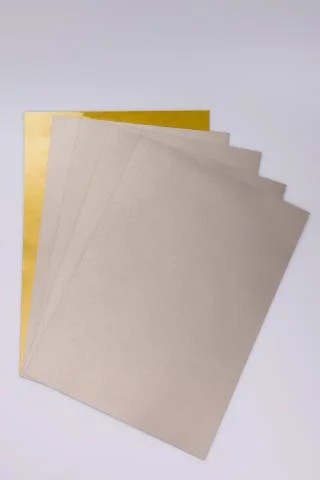
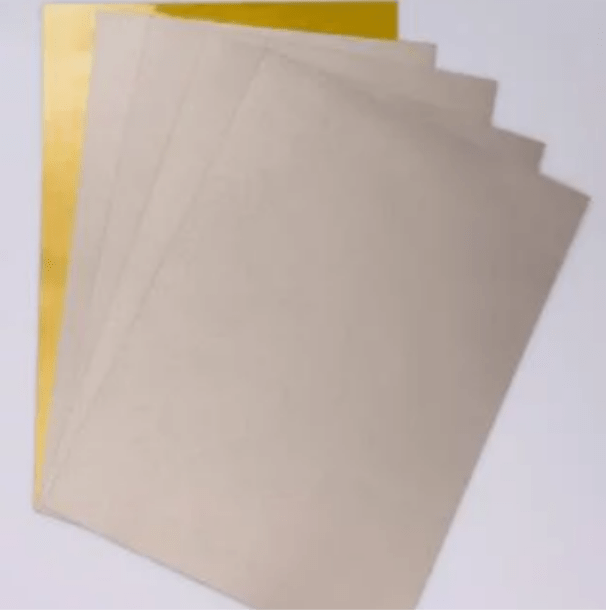
NoiseSorb NS1000HTRC is a near-field noise suppression film used to reduce unwanted coupling, resonances, and surface currents in electronic devices. Common applications include shielding cans, integrated circuits, and flat cables.
According to Laird's datasheet, the 0.1 mm version is compatible with standard reflow processing. Assembly requirements should be checked for the selected part. NS1000HTRC and standard NS1000 have different specifications, so their data should not be used interchangeably.
| Manufacturer | Laird Technologies |
|---|---|
| Frequency range | 20 MHz–3 GHz |
| Performance data | Initial permeability: 150 at 1 MHz; the datasheet provides power-loss and Rtp graphs rather than a single reflectivity rating |
| Standard sheet size | 295 × 210 mm |
| Available thicknesses | 0.1, 0.2, 0.3, 0.4, and 0.5 mm |
| Material | Noise suppression elastomer; resin listed as PU |
| Operating temperature | −40°C to +125°C |
| Attachment options | With or without pressure-sensitive adhesive |
References: Laird product page; NS1000HTRC datasheet. Confirm performance under the intended operating conditions.
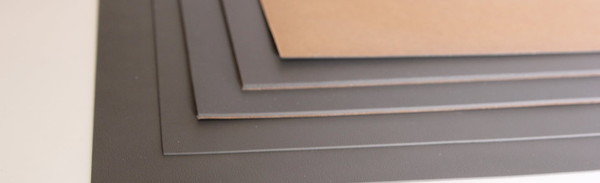
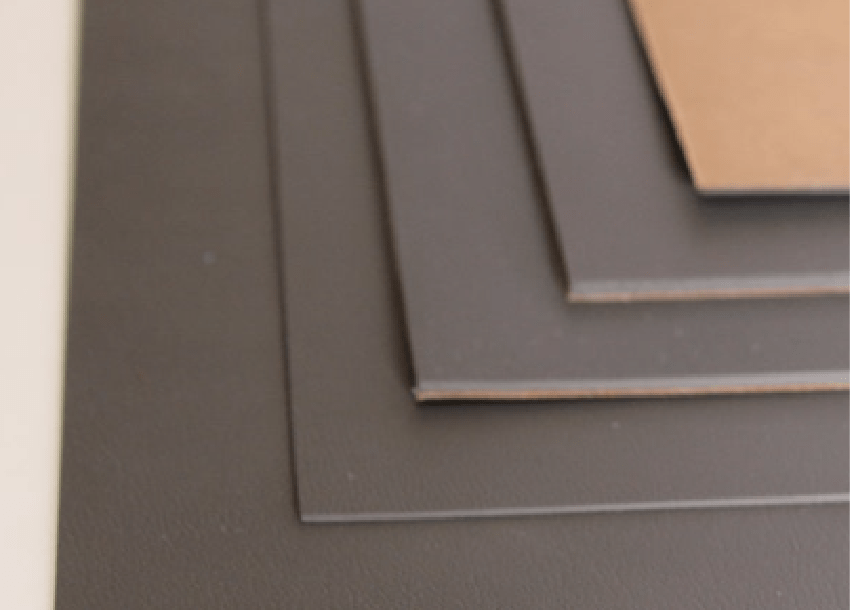
PPG's C-RAM FLX is a flexible, magnetically loaded resonant absorber sheet used to reduce reflections from structures and equipment housings. The material can be fitted to curved surfaces.
Each grade has a specified resonant frequency and thickness. Review the grade-specific data when selecting a sheet. PPG recommends mounting the material on metal for best performance.
| Manufacturer | PPG (Cuming Microwave) |
|---|---|
| Frequency information | Design frequencies within 1–35 GHz |
| Reflectivity | −20 dB or less at the design frequency under normal incidence |
| Standard sheet size | 305 × 305 mm |
| Thickness | Approximately 0.6–6.4 mm, depending on grade |
| Material | Silicone standard; urethane and neoprene alternatives |
| Published service temperature | −60°C to +163°C; confirm suitability for alternative binders and adhesives |
| Options | Pressure-sensitive adhesive backing or metal foil backing |
Reference: PPG: C-RAM FLX datasheet, October 2024. Published properties and performance curves are typical values.
Not necessarily. The absorber must fit the available space and provide the required performance. For resonant sheets, thickness is part of the frequency-specific design. A thinner grade may not work as well at your target frequency.
These materials are designed for different applications. Near-field films address unwanted coupling and noise close to electronic components, while resonant RF sheets reduce reflections at selected frequencies. Check the relevant performance data before considering a replacement.
It depends on the product. Some absorbers require conductive backing, while others can be installed without it. Check the manufacturer's requirements for the selected material, substrate, and adhesive.
Share the target frequency, type of interference, mounting surface, available space, temperature range, and attachment requirements. If possible, include baseline measurements and the performance improvement you need to achieve.
Once you have identified the interference problem and installation requirements, use the manufacturer guides above to compare suitable materials. Request performance data and samples for the specific grade and mounting configuration before making a final selection.
The RF absorber market is expanding rapidly, driven by the increasing need for EMI (Electromagnetic Interference) reduction in 5G/6G, autonomous driving, and defense applications.
This site provides comparative information on products and manufacturers by application to help you identify the ideal solutions for R&D, anechoic chambers, and high-frequency testing.
Advertiser Disclosure:
We receive compensation from some of the companies listed below.This compensation may affect which companies are included and the order in which they appear.
| Frequency Range |
|---|
| 3GHz-320GHz |
| Material |
| Urethane Foam |
| Key Features |
| Up to 50 dB of absorption |
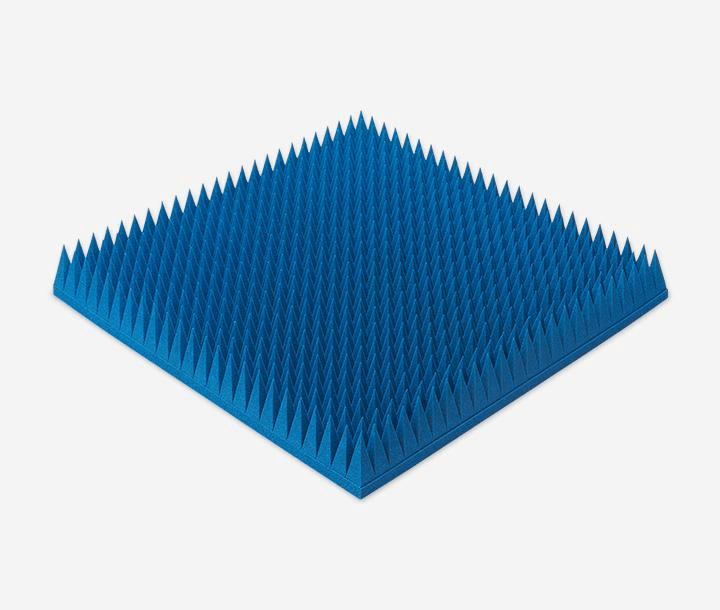
At just 550g per panel—approximately half the weight of competing products (*1)—this polyurethane foam absorber covers a wide frequency range from 3 to 320 GHz.
Delivers 50 dB absorption, outperforming conventional heavy ferrites.
Velcro-backed for rapid mounting, ideal for temporary setups and cost-effective maintenance.
| Frequency Range |
|---|
| 20MHz-3GHz |
| Material |
| Elastomer |
| Key Features |
| Permeability (at 1 MHz): 150 |
Heat-resistant elastomer: Designed for direct SMT processing and high-temperature durability.
Ultra-thin (from 0.1 mm) for high-density integration with robust EMI suppression.
It significantly reduces assembly workload and enables EMI countermeasures without altering the existing manufacturing process.
| Frequency Range |
|---|
| 1-35 GHz |
| Material |
| Elastomer |
| Key Features |
| Reflection Performance: –20 dB |
Frequency-tuned for specific radar absorption, offering superior stealth performance over standard RF sheets (*2).
Millimeter-thin design delivers –20 dB reflection, ensuring high absorption while preserving aerodynamic integrity.
Excellent conformance to complex geometries with thermal stability from –60°C to 150°C—ideal for aerospace platforms.