
As a manufacturer of EMI shielding, thermal interface, and RF absorber materials, Schlegel Electronic Materials (SEM) provides application-specific absorber products through the BandSorb lineup, including thin, flexible microwave absorber materials for narrowband, broadband, and low-frequency applications. The following sections introduce the product key features and specifications, recommended applications, and the company’s support services.
The BandSorb SC Series is a flexible, magnetically loaded, electrically non-conductive silicone rubber absorber designed for a wide range of EMI and RF suppression requirements. Intended to be applied to metal surfaces, it can reduce cavity Q, suppress surface currents, dampen reflections, and reduce RF coupling between microwave components inside electronic housings. It is suitable for use in consumer electronics, telecommunications infrastructure, and medical devices, as well as in automotive electronics such as telematics, radar-based systems, and GPS circuitry.
Reference: Schlegel Electronic Materials Official Website(https://www.schlegelemi.com/absorber-bandsorb/bandsorb-sc-series/)
The BandSorb HP Series is a thin high-permeability ferrite sheet designed to achieve low loss at 13.56 MHz. Its high magnetic permeability makes it suitable for improving the performance of NFC antennas, RFID antennas, and wireless charging applications. The material consists of ferrite with a protective film on one side and adhesive tape on the other side, allowing it to be supplied in sheets or custom configurations for integration into mobile phones, automotive systems, security and access control systems, and handheld battery-powered devices.
Reference: Schlegel Electronic Materials Official Website(https://www.schlegelemi.com/absorber-bandsorb/bandsorb-hp-series/)
BandSorb® ST Series is a thin, flexible, resonant magnetically loaded microwave absorber designed for absorption at a specific frequency or in a narrow frequency band. It reflects -20 dB or less of normally incident microwave energy at the design frequency and is available in varying thicknesses according to the target resonant frequency. The silicone-based construction offers high service temperature capability, making it suitable for reducing reflections and echoes from nearby antennas, lowering radar signature on vehicles, lining magnetron housings to prevent detuning, suppressing cavity resonances inside microwave modules, and supporting impedance matching in waveguide or microstrip applications.
Reference: Schlegel Electronic Materials Official Website(https://www.schlegelemi.com/bandsorb-st-series/)
This resource introduces recommended microwave absorber materials suitable for various EMI and RF suppression applications. Please use this information as a reference when selecting absorber products and manufacturers that match your specific requirements, including consumer electronics, telecommunications infrastructure, automotive electronics, and narrowband microwave applications.
| Product |
Frequency Bandwidth | Absorption Performance | Size | Material | Use Case |
|---|---|---|---|---|---|
| SC Series |
SC-31: ≥12 GHz/SC-52: ≥6 GHz/SC-88: <6 GHz | for high magnetic loss and reflection damping on metal surfaces |
300×300 mm : 0.25 / 0.50 / 1.0 / 1.5 mm |
Silicone elastomer absorber | Metal-surface microwave absorption |
| HP Series |
Optimized for 13.56 MHz | Low-loss, high-permeability ferrite sheet | Typical total thickness: 0.15 mm | Protective film on one side and adhesive tape on the other side |
NFC antennas |
| ST Series |
1.5-40 GHz | Reflects -20 dB or less | Standard sheet: 300×300 mm Thickness: 0.5-3.0 mm |
Electrically non-conductive silicone rubber |
Narrowband absorption Radar-signature reduction |
The RF absorber market is expanding rapidly, driven by the increasing need for EMI (Electromagnetic Interference) reduction in 5G/6G, autonomous driving, and defense applications.
This site provides comparative information on products and manufacturers by application to help you identify the ideal solutions for R&D, anechoic chambers, and high-frequency testing.
Schlegel Electronic Materials provides support for customers seeking EMI shielding, thermal management, and absorber solutions for specific electronic design challenges. In addition to supplying standard sheet materials, the company offers custom configurations across its BandSorb absorber lineup. Customers can make inquiries through the contact options provided on the official website, and SEM also provides technical resources such as product literature, data sheets, and sample request options to support material selection and evaluation.
| Company Name | Schlegel Electronic Materials, Inc. |
|---|---|
| Headquarters Address | 1555 Jefferson Road, Rochester, NY 14623, USA |
| Official Website | https://www.schlegelemi.com/ |
Advertiser Disclosure:
We receive compensation from some of the companies listed below.This compensation may affect which companies are included and the order in which they appear.
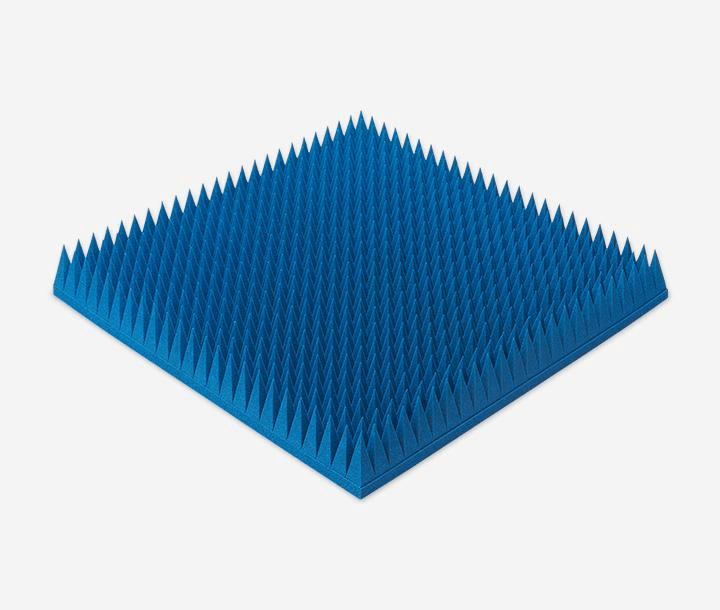
| Frequency Range |
|---|
| 3GHz-320GHz |
| Material |
| Urethane Foam |
| Key Features |
| Up to 50 dB of absorption |
At just 550g per panel—approximately half the weight of competing products (*1)—this polyurethane foam absorber covers a wide frequency range from 3 to 320 GHz.
Delivers 50 dB absorption, outperforming conventional heavy ferrites.
Velcro-backed for rapid mounting, ideal for temporary setups and cost-effective maintenance.
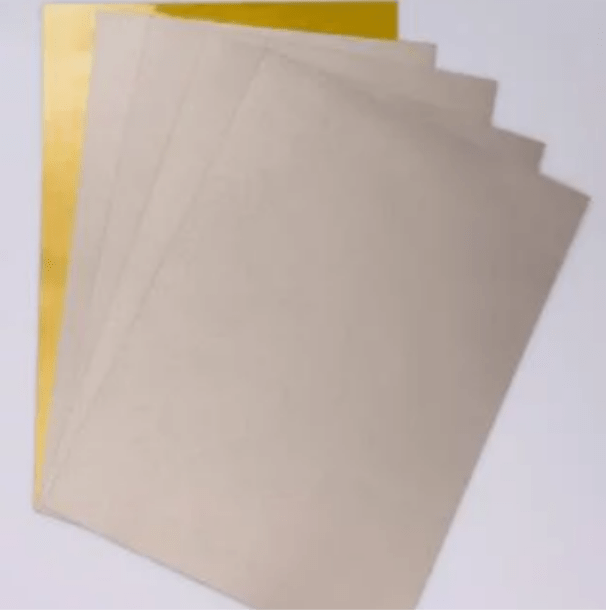
| Frequency Range |
|---|
| 20MHz-3GHz |
| Material |
| Elastomer |
| Key Features |
| Permeability (at 1 MHz): 150 |
Heat-resistant elastomer: Designed for direct SMT processing and high-temperature durability.
Ultra-thin (from 0.1 mm) for high-density integration with robust EMI suppression.
It significantly reduces assembly workload and enables EMI countermeasures without altering the existing manufacturing process.
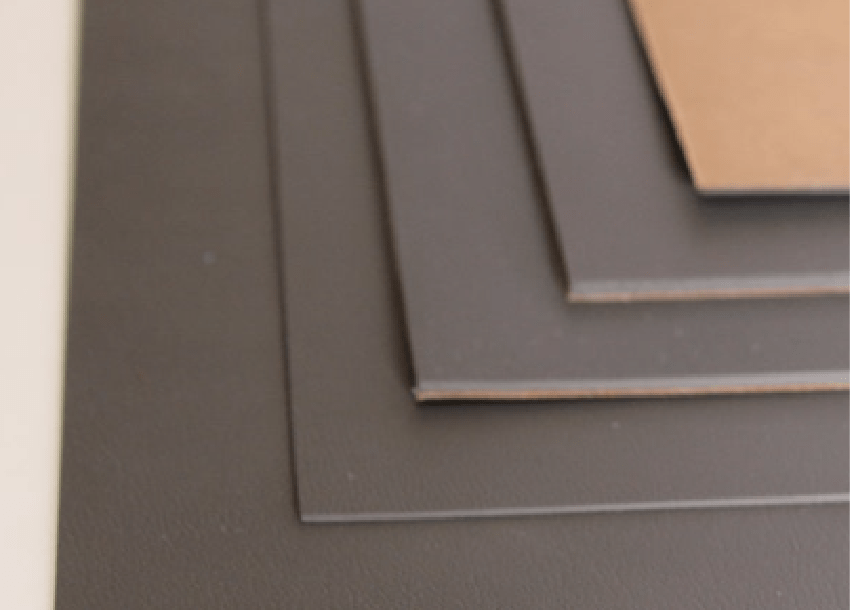
| Frequency Range |
|---|
| 1-35 GHz |
| Material |
| Elastomer |
| Key Features |
| Reflection Performance: –20 dB |
Frequency-tuned for specific radar absorption, offering superior stealth performance over standard RF sheets (*2).
Millimeter-thin design delivers –20 dB reflection, ensuring high absorption while preserving aerodynamic integrity.
Excellent conformance to complex geometries with thermal stability from –60°C to 150°C—ideal for aerospace platforms.