
RF absorber sheet selection guide
RF absorber sheets help reduce unwanted microwave reflections on equipment surfaces. Choose a sheet by operating frequency, available space, mounting surface, and environmental conditions. Check these requirements before comparing published performance values.
See what to check before choosing a sheet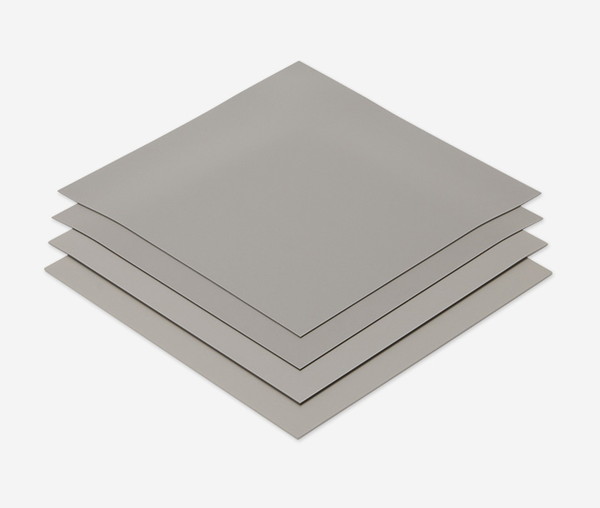
An RF absorber sheet is a sheet-form material used to attenuate unwanted radio-frequency or microwave energy. Depending on its design, it can reduce surface reflections, damp enclosure resonances, or limit coupling between components. The sheet format describes its shape, not a single function or frequency range.
Absorbing materials dissipate electromagnetic energy as heat through dielectric or magnetic losses. Material composition, thickness, and backing determine how the sheet interacts with the field.
Sources: Laird, Theory and Application of RF/Microwave Absorbers ; Laird, Selecting RF/Microwave Absorbers
Reflection-control sheets can treat surfaces that return unwanted energy toward a radar or antenna. The operating band, incidence angle, and mounting surface help determine the appropriate material. Use reflection data for the intended installation conditions.
Lossy sheets can damp cavity resonances or reduce coupling between antennas and microwave components. Placement depends on the interference path and the field within the enclosure. A sheet designed for radar reflections is not automatically suitable for cavity resonance at the same frequency.
Sheets can be considered for individual reflective surfaces in a fixture or test setup. Select the material for that reflection path and verify the measurement after installation. Treating one surface does not establish the performance of the complete test environment.
Sources: Microwave Factory, SF-76.5MB technical data ; Laird, Eccosorb™ MCS
Compare sheets on two separate axes: their intended RF function and bandwidth, and their required backing. A metal-backed sheet may be tuned or broadband.
Sources: Microwave Factory, EC-SORB® SF ; PPG, C-RAM® FFS-125 ; Laird, Custom Molded Elastomeric Covers
Prepare these requirements before comparing products or requesting samples.
Record the operating band and whether the objective is reflection reduction, cavity damping, or coupling control. Match the material to the problem, as well as the frequency.
Include the sheet, backing, and adhesive in the available clearance. Provide dimensions and any curved surfaces. Greater thickness alone does not establish better RF performance.
Specify metal, plastic, or another substrate. Ask whether the published data assumes conductive backing and whether the selected configuration includes it.
Provide temperature, moisture, chemical exposure, and RF power conditions. Request suitable bonding and surface-preparation instructions.
Agree on an acceptance measurement for the actual setup. Use product data to shortlist materials, then validate the installation.
Reference: Laird, Selecting RF/Microwave Absorbers
Identify what the dB value measures before comparing two datasheets.
| Specification | What it tells you | What to confirm |
|---|---|---|
| Frequency range | The band associated with the listed product or family | Exact grade, thickness, and performance across the required band |
| Reflectivity / reflection loss | Reflected signal relative to the stated reference | Sign convention, backing, incidence angle, and polarization |
| Insertion loss | Reduction in transmission after inserting the material | Test geometry; the result includes effects beyond absorption alone |
| Typical or average value | A representative result or an average under stated conditions | Whether a minimum or guaranteed specification is available |
| Thickness and backing | The physical configuration associated with the RF result | Whether the installed stack matches the tested configuration |
Reference: Laird, Theory and Application of RF/Microwave Absorbers
The three products below represent different approaches to microwave absorption: a sheet designed for a specific millimeter-wave frequency, a custom molded absorber, and a flexible broadband sheet. Their performance and installation requirements differ, so each needs to be evaluated for its intended application.
| Product | Design focus | Published frequency | What to check |
|---|---|---|---|
| EC-SORB® SF-76.5MB | Thin sheet for 76.5 GHz radar applications | 76.5 GHz | Required bandwidth and adhesion to the mounting surface |
| Custom Molded Elastomeric Covers | Custom geometry and material properties | Application-specific; confirm the target frequency with Laird | Frequency requirements, part geometry, environmental exposure, and test data |
| C-RAM® FFS-125 | Flexible broadband magnetic sheet | 2–12 GHz | Metal contact, backing requirements, and adhesive options |
EC-SORB® SF-76.5MB is a resonance-type silicone absorber sheet developed for automotive collision-avoidance radar operating at 76.5 GHz. At just 1.2 mm thick, it can fit into installations where space is limited.
The sheet has an aluminum-coated polyester film on the back, allowing it to be mounted on nonconductive surfaces such as plastic. It is also flexible enough to be cut and fitted to curved surfaces.
Reference: Microwave Factory, SF-76.5MB technical data . Published performance figures are representative, not guaranteed.
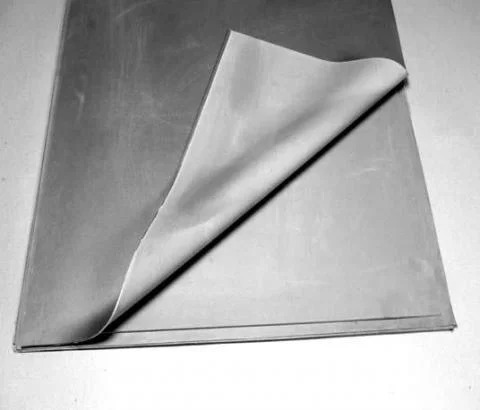
Laird offers custom elastomeric absorbers as sheets and molded parts, including shapes with tight corners or tapered sections. Both the material and electrical properties can be tailored to the application.
Material options include nitrile, neoprene, urethane, silicone, fluorosilicone, and fluoroelastomer. Selection depends on the operating environment, particularly exposure to fuel, chemicals, high temperatures, abrasion, or marine conditions. Absorbers can be designed for one or multiple frequencies.
When discussing a custom design with Laird, provide the target frequency, part drawing, operating environment, and required RF performance. These details help determine the appropriate material and geometry.
Reference: Laird, Custom Molded Elastomeric Covers
PPG's C-RAM® FFS-125 is a flexible, magnetically loaded sheet designed to reduce microwave reflections across a broad frequency range. Its published typical reflectivity is approximately −10 dB across 2–12 GHz. Applications include aircraft structures, ship masts, and instrument housings.
According to the application bulletin, the sheet must be in close contact with a metal surface to achieve the intended resonant behavior. The bulletin describes bonding with silicone RTV adhesive. PPG also offers metal-backed and pressure-sensitive adhesive configurations.
References: PPG, C-RAM FFS-125 product page ; Technical Bulletin 310-6 . Check the dimensions and backing options for the specific configuration you plan to order.
Some can. SF-76.5MB includes a reverse-side metal layer for installation on nonmetal surfaces. Other products may require a metal substrate or a backed version. Follow the instructions for the selected configuration.
No. Thickness affects performance, but material properties and impedance matching also matter. Compare data for the exact thickness at the required frequency.
Do not assume they can. Absorbers and shields serve different functions and may be used together. Evaluate the complete design against its interference and shielding requirements.
Consider one when the required geometry is difficult to cover with a flat sheet. Provide a drawing, target band, and exposure conditions so the manufacturer can assess a suitable design.
Next step
Once you have defined your frequency range, mounting conditions, and space constraints, compare the available product families using the manufacturer guides above. Check the latest technical data with each manufacturer before making a final selection.
The RF absorber market is expanding rapidly, driven by the increasing need for EMI (Electromagnetic Interference) reduction in 5G/6G, autonomous driving, and defense applications.
This site provides comparative information on products and manufacturers by application to help you identify the ideal solutions for R&D, anechoic chambers, and high-frequency testing.
Advertiser Disclosure:
We receive compensation from some of the companies listed below.This compensation may affect which companies are included and the order in which they appear.
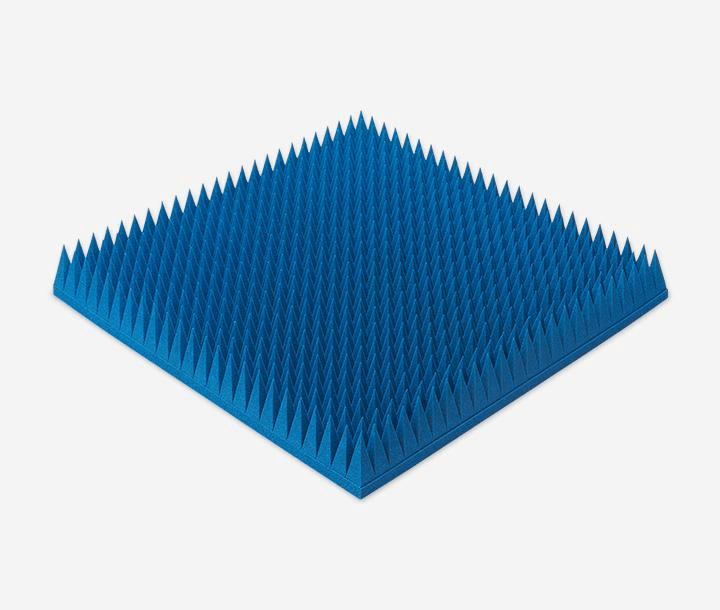
| Frequency Range |
|---|
| 3GHz-320GHz |
| Material |
| Urethane Foam |
| Key Features |
| Up to 50 dB of absorption |
At just 550g per panel—approximately half the weight of competing products (*1)—this polyurethane foam absorber covers a wide frequency range from 3 to 320 GHz.
Delivers 50 dB absorption, outperforming conventional heavy ferrites.
Velcro-backed for rapid mounting, ideal for temporary setups and cost-effective maintenance.
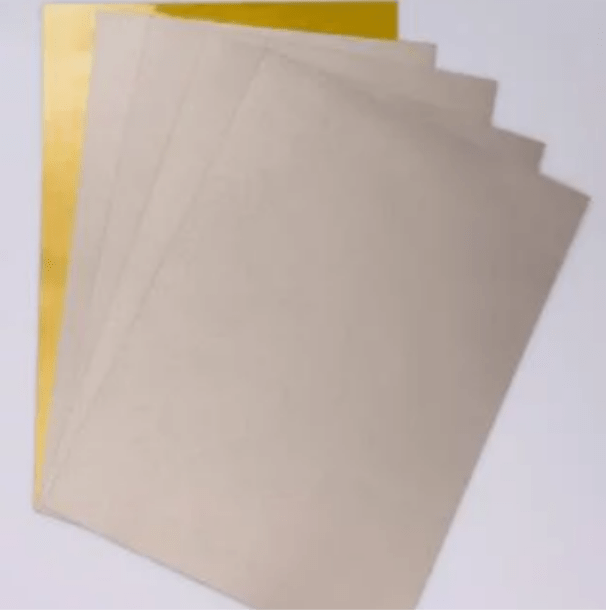
| Frequency Range |
|---|
| 20MHz-3GHz |
| Material |
| Elastomer |
| Key Features |
| Permeability (at 1 MHz): 150 |
Heat-resistant elastomer: Designed for direct SMT processing and high-temperature durability.
Ultra-thin (from 0.1 mm) for high-density integration with robust EMI suppression.
It significantly reduces assembly workload and enables EMI countermeasures without altering the existing manufacturing process.
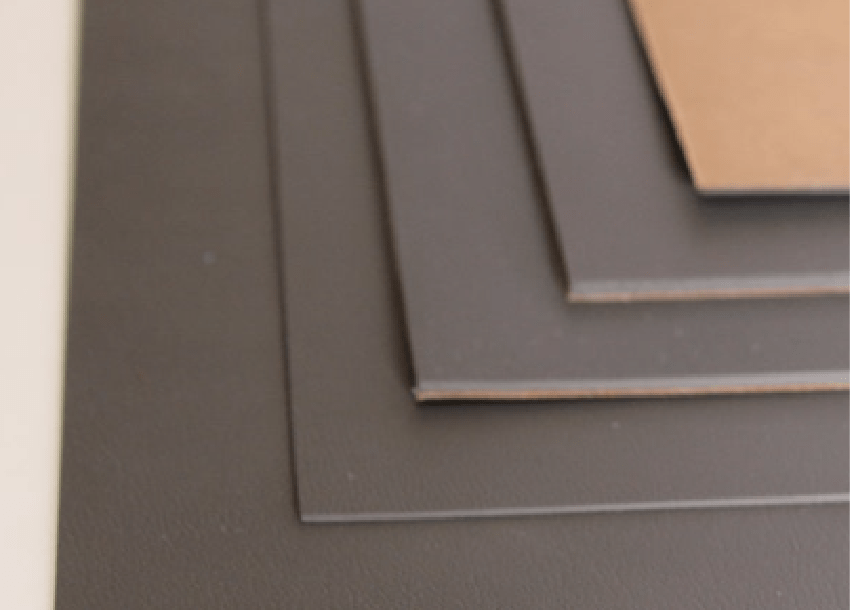
| Frequency Range |
|---|
| 1-35 GHz |
| Material |
| Elastomer |
| Key Features |
| Reflection Performance: –20 dB |
Frequency-tuned for specific radar absorption, offering superior stealth performance over standard RF sheets (*2).
Millimeter-thin design delivers –20 dB reflection, ensuring high absorption while preserving aerodynamic integrity.
Excellent conformance to complex geometries with thermal stability from –60°C to 150°C—ideal for aerospace platforms.